

Choosing the right consumables for Polymerase Chain Reaction (PCR) and real-time quantitative PCR (qPCR) is a foundational decision in any molecular biology laboratory. While the biochemistry remains the same, the vessel—be it a PCR tube or a PCR plate—can significantly impact workflow efficiency, thermal transfer, and data consistency.
As a leading manufacturer of high-quality laboratory plastics, Suzhou Ace Biomedical Technology Co., Ltd. is committed to helping researchers optimize their experimental setups. This article explores the specific scenarios where you should opt for PCR tubes versus PCR plates to ensure the best results for your genomic applications.
Understanding the Fundamentals of Thermal Transfer
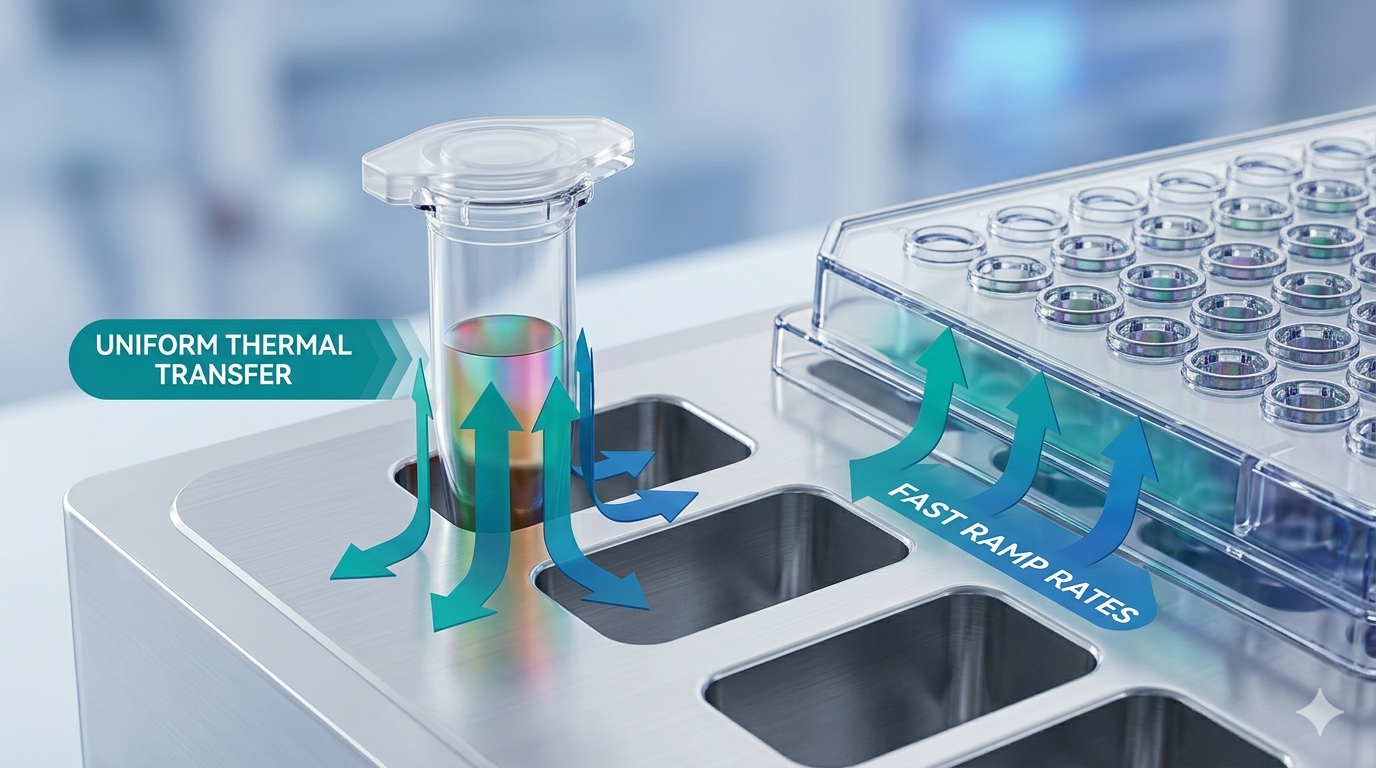
The primary goal of any PCR vessel is to provide a uniform thermal environment. Whether you are using a single 0.2mL tube or a 384-well plate, the plastic must be thin-walled and manufactured from high-purity polypropylene (PP). This ensures that the heat from the thermal cycler block reaches the reaction mix rapidly and evenly.
When to Choose PCR Tubes (and Tube Strips)
PCR tubes are the “flexible veterans” of the lab. They typically come in 0.2mL or 0.5mL volumes and are available as individual tubes or 8-strip/12-strip configurations.
1. Low-Throughput Experiments
If you are running fewer than 16 to 24 samples at a time, individual tubes or strips are the most economical choice. They allow you to use only what you need, reducing waste and lowering costs per reaction.
2. Preliminary Trials and Optimization
When testing new primers or optimizing annealing temperatures, you often only need a few reactions. PCR strips allow for easy handling and can be labeled individually, making them ideal for the “trial and error” phase of project development.
3. Diverse Incubation Protocols
If your samples require different incubation times or need to be removed from the thermal cycler at staggered intervals, individual tubes offer the physical independence necessary for such workflows.
4. Limited Storage Space
For small-scale DNA banking or short-term storage of a few amplified products, tubes are more space-efficient in a freezer rack than a mostly empty 96-well plate.
When to Choose PCR Plates
As research scales up, the limitations of individual tubes become apparent. PCR plates (96-well or 384-well) are designed for standardized, high-volume genomic work.
1. High-Throughput Screening
Once your sample count exceeds 24, moving to a 96-well plate becomes a matter of manual sanity and time management. It facilitates the use of multichannel pipettes, which drastically reduces pipetting errors and physical fatigue.
2. Automation and Liquid Handling
If your laboratory utilizes automated liquid handling systems or robotic workstations, PCR plates are mandatory. Their standardized dimensions (ANSI/SLAS footprint) allow robots to grip, move, and dispense into them with micron-level precision.
3. Quantitative PCR (qPCR)
Consistency is the soul of qPCR. PCR plates provide a level of uniformity that is difficult to achieve with strips. Using a single plate ensures that all wells have the same thickness and optical properties, which is crucial when the fluorometer is reading signals through the seal or the tube bottom.
4. Long-Term Large-Scale Storage
If you are creating a cDNA library or a genomic DNA archive, 96-well plates are the industry standard for organization. When combined with Silicone Sealing Mats or Sealing Films, they provide a robust, leak-proof environment for long-term preservation at -80°C.
Critical Factors: Skirts and Sealing
Choosing between tubes and plates is only half the battle. You must also consider the physical configuration:
-
Non-Skirted Plates: These provide the best fit for most thermal cycler blocks but lack the rigidity needed for robotic arms.
-
Semi/Full-Skirted Plates: These offer the mechanical strength required for automation and provide a surface for barcoding.
-
Sealing Matters: For plates, the choice of Sealing Film (pressure-sensitive or heat-seal) or Silicone Sealing Mats is vital to prevent evaporation, especially in high-temperature denaturation steps.
Why Quality Matters: The Ace Biomedical Advantage
Regardless of whether you choose a tube or a plate, the quality of the plastic is non-negotiable. At Suzhou Ace Biomedical Technology Co., Ltd., our PCR consumables are manufactured in Class 100,000 cleanrooms to ensure they are:
-
DNase/RNase-Free: Protecting your precious samples from degradation.
-
Pyrogen-Free: Ensuring no biological interference with your reactions.
-
Ultra-Thin Wall Design: Maximizing heat transfer efficiency for faster cycles and more consistent yields.
Our range includes everything from standard 0.2mL PCR tubes to high-performance 384-well plates, as well as the essential accessories like Screw Cap Tubes for reagent storage and Centrifuge Tubes for sample preparation.
Conclusion
The choice between a PCR tube and a PCR plate ultimately depends on your throughput, automation needs, and precision requirements. For small, flexible pilot studies, the PCR tube remains king. However, for the modern high-output laboratory, the PCR plate is an indispensable tool for scalability and data integrity.
For more technical specifications or to request samples for your lab, visit our official website at www.ace-biomedical.com. High-precision science starts with high-precision plastics.
Post time: May-12-2026