

-
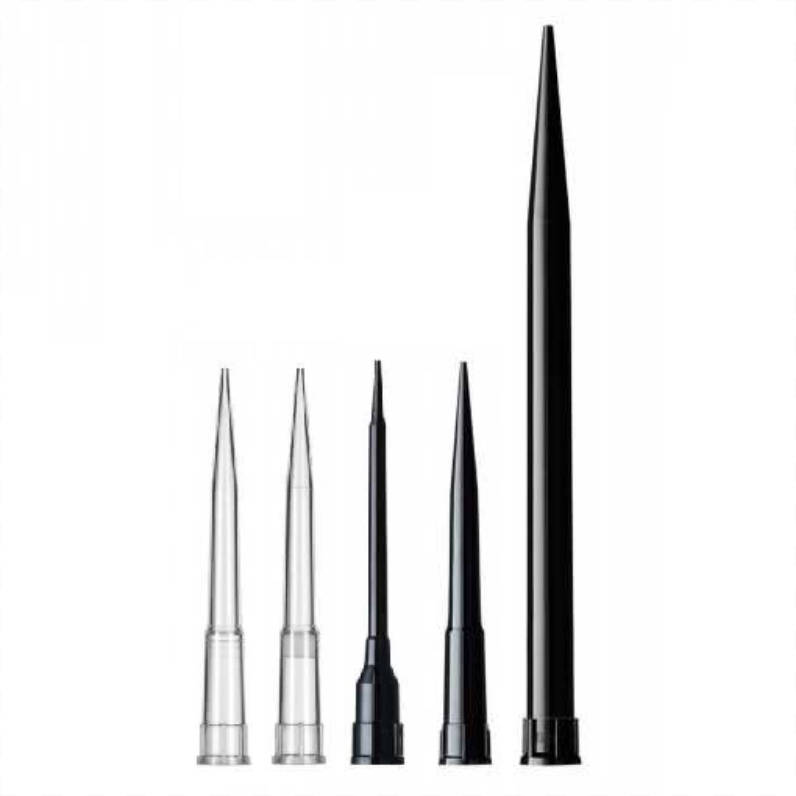
Direct Process Verification: The transparency of the tip allows the user to directly observe the entire liquid handling process. From the initial aspiration—ensuring the tip is correctly immersed and the correct volume is being drawn—to the complete dispensing of the sample, visual confirmation is instantaneous. This is invaluable for: -
Training New Personnel: Trainees can immediately see the results of their pipetting technique, such as the formation of air bubbles or incomplete dispensing, facilitating faster and more effective learning. -
Troubleshooting: If an anomaly occurs during a protocol, the ability to see the liquid level helps quickly identify issues like clogs or partial tip attachment. -
General Applications: These tips are perfectly suited for sample preparation (dilutions, aliquoting), reagent addition in cell culture, buffer preparation, and routine molecular biology workflows like standard PCR setup. The priority in these tasks is the accurate transfer of volume, with minimal concern for the sample’s interaction with light.
-
-
Optical Integrity in Fluorescent Assays: This is the most critical application for black tips. In quantitative PCR (qPCR), ELISA, and other fluorescence-based detection methods, the excitation light used to probe the sample can cause two major issues in clear tips: -
Optical Cross-Talk: Fluorescent signals can “bleed” through the transparent plastic walls into adjacent wells on a plate, leading to inflated background noise and compromised data accuracy. -
Signal Quenching/Scattering: Light can scatter within the tip itself, affecting the intensity of the signal measured. Black tips act as a light barrier, effectively containing the signal within each well. This significantly reduces background noise, increases the signal-to-noise ratio, and enhances the sensitivity and reproducibility of your assay, especially when dealing with low-abundance targets.
-
-
Protection for Photosensitive Samples: Certain reagents, such as fluorescent dyes, vitamins, or pharmaceuticals, are degraded by light. Using black tips during their handling minimizes exposure, preserving sample integrity from aspiration to dispensing. -
Enhanced Performance in Automation: Automated liquid handling stations frequently use capacitive or monochromatic light-based sensors for liquid-level detection. The high contrast provided by a black tip against the clear liquid meniscus drastically improves the reliability and speed of these sensors, reducing errors in high-throughput environments.
-
Filter Tips: Both black and clear tips are available with filters. Aerosol barriers are crucial for preventing pipette shaft contamination and sample carryover, especially in molecular biology applications like PCR. The choice between a filtered black or clear tip then depends on combining the need for contamination control with the optical requirements of the assay. -
Quality of Manufacturing: Regardless of color, the quality of the tip is paramount. At Ace Biomedical, our tips are manufactured in a ISO-certified cleanroom environment. We ensure features like: -
Low Liquid Retention: A perfectly molded interior surface to maximize sample recovery. -
Excellent Sealability: Consistent fit with a wide range of pipettes for accurate volume delivery. -
Purity: Certified to be free of RNase, DNase, Endotoxin, and ATP.
-
-
Choose Clear Pipette Tips for day-to-day laboratory tasks where visual confirmation of liquid handling is the top priority. They are the economical and effective choice for most general purposes. -
Choose Black Pipette Tips when performing sensitive fluorescence detection assays (like qPCR), working with light-sensitive materials, or operating on automated liquid handling platforms where sensor reliability is key.
Post time: Oct-13-2025